



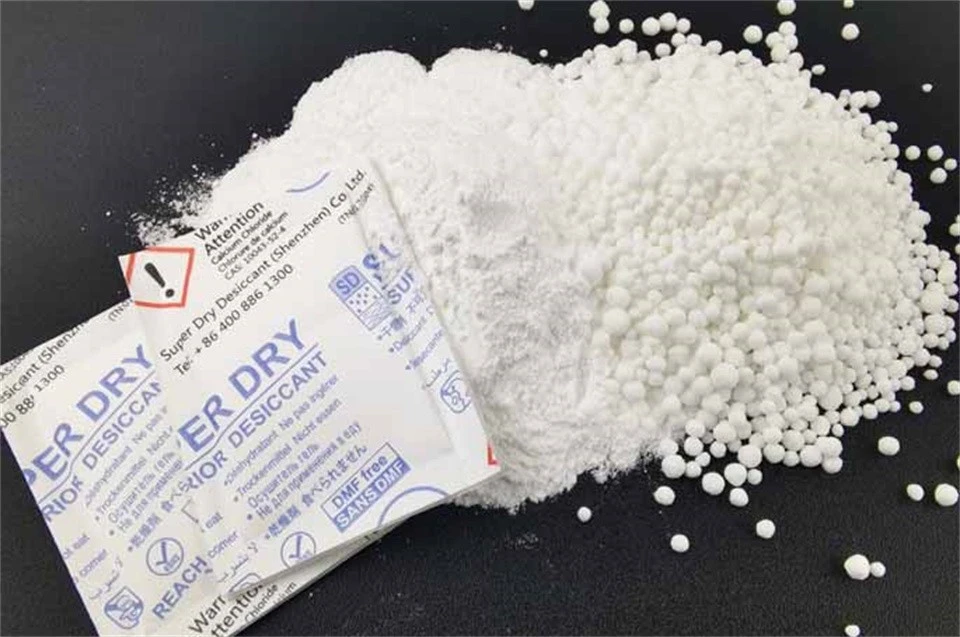

Zibo Hondo Chemical Co., Ltd. is one of the most experienced manufacturers and suppliers of desiccant grade cmc in China. Our factory offer high quality products made in China with competitive price. If you have any enquiry about quotation, please feel free to email us.
Desiccant grade CMC (Sodium Carboxymethyl Cellulose) is a water-soluble polymer widely used as a functional auxiliary additive in composite desiccant systems. With excellent thickening, bonding, film-forming, and water-retention properties, CMC is not the primary hygroscopic material, but plays a critical role in structural reinforcement, moisture absorption regulation, and performance stabilization of desiccant products.
By incorporating Sodium CMC into desiccant formulations, manufacturers can improve particle integrity, control moisture absorption behavior, reduce dusting and caking, and extend effective service life. As a result, CMC for desiccants is widely applied in food packaging, pharmaceutical protection, electronics moisture control, and environmentally friendly desiccant solutions, enhancing both product reliability and user safety.
Function

Sodium Carboxymethyl Cellulose (CMC) functions primarily as a water-absorbing regulator, retention agent, and structural stabilizer in desiccant systems. Thanks to its strong hydrophilicity and swelling behavior, Na-CMC rapidly absorbs moisture and binds water molecules within its polymer network, improving overall moisture-handling efficiency without causing sudden saturation.
When incorporated into desiccant granules, blocks, or carrier matrices, CMC enhances mechanical strength and cohesion, effectively preventing powdering, cracking, or agglomeration after moisture uptake. In addition, CMC improves bonding between hygroscopic agents and carrier materials, helping maintain uniform particle structure and stable moisture absorption performance over extended storage periods. These properties make Cellulose CMC a reliable functional additive in desiccants used for food, pharmaceuticals, electronics, and consumer goods packaging.
Application
-
1. Composite Desiccant Applications
- When producing granular, flake, or block composite desiccants based on calcium chloride or montmorillonite, desiccant used CMC serves as an effective binder, bonding hygroscopic components such as calcium chloride, silica gel, and other additives to prevent powdering.
- For example, in calcium chloride desiccants, CMC is blended with calcium chloride crystals and starch before granulation, significantly improving particle strength and resistance to breakage during transportation and handling.
-
2. Calcium Chloride and Calcium Oxide Desiccant
- When calcium chloride or calcium oxide desiccant is used to control moisture absorption rate, desiccant used CMC can act as a "moisture absorption rate regulator," adjusting the desiccant's moisture absorption rate and water retention, preventing the desiccant from rapidly absorbing moisture and causing a sudden drop in local humidity. The hydrophilic groups (such as carboxyl and hydroxyl groups) in CMC form hydrogen bonds with water molecules, slowly releasing water, thereby balancing the desiccant's moisture absorption efficiency and extending its effective duration.
-
3. Food-Grade Desiccant
- In food packaging applications such as moisture-proof bags and oxygen-absorbing desiccants, food-grade CMC compliant with FAO/WHO standards is used to enhance safety and formulation stability. CMC is non-toxic, non-irritating, and exhibits low migration risk, making it suitable for moisture protection of products such as tea, nuts, mooncakes, and dried foods.
-
4. Environmentally Friendly Desiccant
- In environmentally friendly desiccants based on natural materials (such as plant fibers and diatomaceous earth), CMC can improve the matrix's pore structure, increase the specific surface area, and indirectly enhance moisture absorption capacity. For example, mixing CMC with diatomaceous earth and then calcining it creates a more uniform porous structure, optimizing the desiccant's moisture absorption efficiency and thus improving its performance.
Practical Problems & Solutions
Problem 1: Desiccant granules break and generate dust
Solution: Use desiccant grade CMC to enhance particle bonding and film strength.
Problem 2: Desiccant absorbs moisture too fast and deliquesces
Solution: CMC regulates moisture uptake for sustained absorption.
Problem 3: Desiccant clumps in high-humidity environments
Solution: CMC reduces interparticle adhesion and maintains loose structure.
Problem 4: Reduced effectiveness in cold-chain transportation
Solution: CMC maintains functional stability at low temperatures.

Advantage

1. Physical Structure Optimization
CMC for desiccant provides film-forming and mechanical support functions. When dissolved in water, it forms a stable colloidal solution. After drying, a thin polymer film is formed on the surface of desiccant particles, significantly enhancing mechanical strength and resistance to breakage. This effectively reduces dust generation during transportation, filling, and end-use handling, improving product cleanliness and user experience.
CMC also plays a pore-regulating role during desiccant preparation. Its colloidal properties help fill and redistribute microvoids within the matrix, forming a more uniform microporous structure. This optimized pore network facilitates controlled diffusion of water vapor toward hygroscopic components, improving moisture utilization efficiency without compromising structural stability.
.
2. Hygroscopicity Regulating Function
Desiccant used CMC effectively moderates moisture absorption behavior. When primary hygroscopic components such as calcium chloride absorb moisture too rapidly, CMC absorbs part of the water and swells into a gel structure. This slows down the overall moisture uptake rate and creates a sustained, controlled absorption effect rather than rapid saturation.
CMC also exhibits strong anti-agglomeration performance. In high-humidity environments, desiccants tend to clump after moisture absorption. By encapsulating hygroscopic particles and reducing direct interparticle contact, CMC minimizes adhesion and maintains a loose particle state, ensuring continued exposure to ambient moisture and consistent drying efficiency.


3. Enhanced Safety and Compatibility
Desiccant used CMC is safe for food contact applications. As a cellulose-based material widely approved as a food additive, CMC helps reduce the risk of chemical migration in food-grade desiccants and complies with relevant safety standards such as GB 1886.232-2016. Compared with synthetic organic polymers, CMC is biodegradable and environmentally friendly, making it suitable for sustainable and eco-friendly desiccant formulations with reduced environmental impact after disposal.
4. Adaptability for Special Scenarios
Desiccant used CMC demonstrates excellent adaptability under special environmental conditions. In low-temperature environments, CMC-containing systems maintain adequate moisture-binding functionality without embrittlement or performance loss. This prevents desiccants from freezing, cracking, or becoming ineffective during cold exposure. As a result, CMC-modified desiccants are particularly suitable for cold-chain logistics, refrigerated storage, and export transportation, where stable moisture control is required across fluctuating temperature conditions.
Specification
|
Test Item |
Specification |
|
Appearance |
White and Yellowish Powder |
|
Viscosity (mPa.s) |
1000~5000 |
|
Degree of Substitution % |
≥0.8 |
|
Loss on drying, % |
≤ 10.0 |
|
PH, 1% solution |
6.0~8.0 |
|
Purity, % |
as customers requirement |
|
Sodium Glycolate, % |
≤ 0.4 |
|
Cloride, % |
≤ 0.5 |
|
Heavy Metal (%), mg/kg |
≤ 2 |
|
Lead (Pb), mg/kg |
≤ 2 |
|
As (As), mg/kg |
≤ 2 |
Quality Control of Desiccant Grade CMC
Raw Material Control: High-purity cellulose with controlled fiber source and impurity levels
Process Control: Strict monitoring of viscosity, degree of substitution, and particle size
Finished Product Inspection: Testing for solubility, moisture, pH, and consistency
Pre-shipment Inspection: Appearance, packaging integrity, and key performance indicators
Quality Assurance: Batch traceability and formulation stability for long-term supply reliability

Why Choose Our CMC for Desiccants

Specialized grades developed for composite and food-grade desiccants
Stable performance under high humidity and long storage conditions
Effective control of moisture absorption rate and particle integrity
Compliance with food safety and environmental standards
Technical support for formulation optimization and industrial scaling
Packing & Storage
Storage:
1. Store in a cool, dry, clean, ventilated environment. Temperature Max. 70℃, with relative humidity ≤80%.
Storage:
2. The product for pharmaceutical and food grade should not be put together with the toxic substance and harmful substance or substance with peculiar smell during transportation and storage.
Storage:
3. Since the date of production, a preservation period should not exceed 4 years for the industrial product and 2 years for the product for pharmaceutical and food grade.
Storage:
4. The products should be prevented from water and package bag damaging during transportation.
Packing:
25kg kraft paper bag with PE inner, or as clients request.

Conclusion
Desiccant used CMC is not a traditional "hygroscopic agent" in desiccant. Instead, it optimizes the overall performance of the desiccant through auxiliary functions such as improved physical structure, moisture absorption rate regulation, and enhanced safety. Its core application lies in leveraging its colloidal properties and biocompatibility to address practical desiccant challenges in molding, stability, and applicable scenarios. It plays an irreplaceable role in composite, food-grade, and environmentally friendly desiccants. In actual use, care should be taken to avoid direct mixing with strongly acidic or alkaline ingredients to prevent adverse effects.
FAQ
Q1: Is CMC a primary hygroscopic agent?
A: No. CMC is a functional additive used to regulate structure and moisture behavior.
Q2: Is CMC suitable for food packaging desiccants?
A: Yes. Food-grade CMC complies with relevant safety standards.
Q3: Can CMC improve desiccant shelf life?
A: Yes. By stabilizing structure and absorption behavior, CMC extends effective service life.
Hot Tags: desiccant grade cmc, China desiccant grade cmc manufacturers, suppliers, factory, Pharma Excipients CMC, CMC for textile dyeing, Anti dirt redeposition agent CMC, CMC Mosquito Coils Grade, Cosmetic Grade CMC, CMC Battery


