



Zibo Hondo Chemical Co., Ltd. is one of the most experienced manufacturers and suppliers of battery grade cmc in China. Our factory offer high quality products made in China with competitive price. If you have any enquiry about quotation, please feel free to email us.
Hondo Chem manufactured Battery-grade sodium carboxymethyl cellulose (Battery grade CMC) is a water-soluble anionic cellulose ether with high product purity, high degree of substitution, less solution gel fiber, high transparency, and good solution conductivity. At the same time, the uniform degree of substitution for battery grade CMC provides a stable surge environment for the aqueous solution, which can improve the energy conduction efficiency of the battery. Hondo chem Battery grade CMC is mainly used as a water-based binder and dispersant in the battery field, especially in the negative electrode materials of lithium-ion batteries.It is widely applied in graphite, silicon-based, silicon-carbon composite, and other advanced anode systems, typically in combination with SBR latex.
Core Functions
-
1. Bonding Performance
Hondo Chem battery-grade CMC contains ionized carboxymethyl groups (–COO⁻) that adsorb onto electrode materials such as graphite and silicon-based anodes through hydrogen bonding and electrostatic interaction. This forms a stable three-dimensional polymer network, significantly enhancing particle-to-particle and particle-to-current-collector adhesion.
Bonding strength increases with higher degree of substitution (DS 0.4–1.2) and molecular weight (Mw 10⁴–10⁶), making it especially suitable for anode materials with high specific surface area and low intrinsic conductivity.
Hondo Chem supplies battery-grade CMC with DS typically ≥1.0, ensuring higher slurry viscosity and stronger adhesion. Each batch is tightly controlled within a narrow DS range to guarantee consistent bonding performance in large-scale electrode manufacturing. -
2. Dispersion Performance
The hydrophilic functional groups (–OH, –COO⁻) in battery-grade CMC enable it to form a stable colloidal system in aqueous slurry. Through electrostatic repulsion and steric hindrance, CMC effectively prevents agglomeration of active materials, ensuring uniform slurry dispersion.
This dispersion stability directly improves slurry homogeneity, coating consistency, and electrical contact efficiency, particularly in high solid-content electrode formulations.
-
3. Electrochemical Stability
Within the typical battery operating voltage window (0–3.0 V vs. Li⁺), Hondo Chem battery-grade CMC remains electrochemically inert. Its thermal decomposition temperature (220–280 °C) is well above normal battery operating conditions (–20 to 60 °C), minimizing side reactions during cycling.
Electrochemical stability is further enhanced by high purity and controlled DS. With purity ≥99.5% and DS ≥1.0, Hondo Chem battery-grade CMC contains fewer metal ions and unetherified cellulose residues, reducing interfacial impedance and improving long-term cycling stability.
-
4. Liquid Absorption and Liquid Retention Ability
The three-dimensional polymer network of battery-grade CMC improves electrolyte uptake and retention, enhancing electrode wettability and stabilizing the solid–electrolyte interface. This is particularly beneficial for silicon-based anodes with large volume expansion.
In practical applications, Hondo Chem battery-grade CMC can reduce electrolyte consumption by approximately 10–20%, helping extend cycle life while lowering overall battery manufacturing costs.
Application Fields
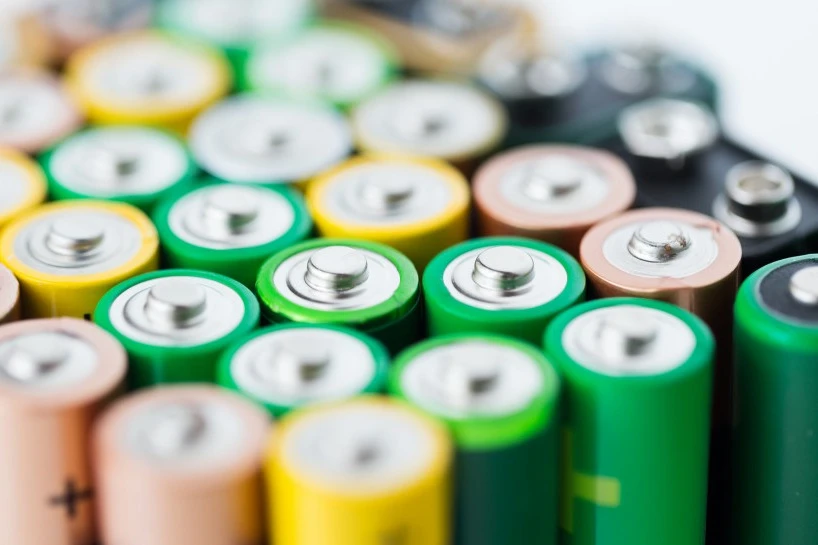
In Lithium-ion Batteries (LIBs)
Battery-grade CMC is widely used as an anode binder in graphite, silicon–carbon, and silicon–oxygen systems, commonly compounded with SBR. CMC provides structural rigidity while SBR contributes elasticity, jointly improving electrode integrity and cycling stability. In silicon-based anodes, first-cycle efficiency can typically improve by 5–10%.

Sodium-ion Batteries (NIBs) / Potassium-ion Batteries (KIBs)
Battery-grade CMC is suitable for hard carbon and soft carbon anodes, supporting fully aqueous processing routes. Its stable performance and cost efficiency make it a key functional binder for the industrialization of sodium-ion battery technologies.

Positive Electrode Auxiliary Application
In lithium iron phosphate (LFP) cathode systems, high-purity battery-grade CMC can partially replace PVDF in aqueous slurries, reducing material and processing costs. Due to cathode-side oxidation requirements, strict purity and stability control are essential.

Lead-acid Battery
In lead-acid battery, battery grade CMC act as a separator additive can effectively improve the liquid absorption capacity and mechanical strength, reduce electrolyte stratification, and extend service life.

Supercapacitor
Battery-grade CMC is suitable for aqueous activated carbon electrodes, balancing adhesion strength and ionic conductivity. It is ideal for low-cost, high-safety energy storage systems.

Key Links in Electrode Preparation
Slurry preparation: Ensures stable dispersion of active materials and conductive agents, preventing agglomeration-related coating defects.
Coating & drying: Controls slurry rheology and forms a tough adhesive film, resisting mechanical stress during electrode calendering.
Industry Challenges & Solutions
product key technologies

Electrode cracking and binder failure in high-expansion anode systems
Solution
Hondo Chem battery-grade CMC provides strong interfacial adhesion while maintaining controlled rigidity. When compounded with elastomers such as SBR, it forms a resilient binder system that accommodates volume expansion in silicon-based anodes, significantly reducing electrode cracking and powder shedding during cycling.
Inconsistent slurry behavior affecting coating uniformity in high solid-content formulations
Solution
With a tightly controlled DS range and optimized molecular weight distribution, Hondo Chem battery-grade CMC delivers predictable rheology and dispersion stability. This ensures uniform slurry flow, consistent coating thickness, and reduced defect rates, even in high solid-loading electrode systems.

Advantages of Battery Grade CMC Produced by Hondo Chem
Strong electrolyte resistance:
Thanks to its high degree of substitution (DS ≥ 1.0), Hondo Chem battery-grade CMC forms a dense and high-strength adhesive film after absorbing moisture in high-concentration lithium salt electrolytes such as LiPF₆.
The well-distributed carboxymethyl groups enhance intermolecular interactions within the polymer network, effectively suppressing excessive swelling and film rupture. This ensures stable binder performance at the electrode–electrolyte interface, even under aggressive electrolyte conditions and long-term cycling.
Excellent High-Temperature Stability:
Hondo Chem battery-grade CMC maintains stable structural and rheological properties at temperatures above 150 °C.
This thermal stability enables reliable performance in fast-charging batteries and high-power applications, where rapid heat generation and elevated operating temperatures place higher demands on binder materials. Stable binder behavior under thermal stress helps preserve electrode integrity and cycling consistency.


High mechanical strength and Structural Resilience:
When compounded with elastomers such as styrene-butadiene rubber (SBR), Hondo Chem battery-grade CMC forms a balanced binder system combining rigidity and elasticity.
This synergistic structure provides strong mechanical support while accommodating electrode deformation during cycling, making it particularly suitable for high-stress environments and advanced anode systems with volume expansion.
Good conductivity:
With a high degree of substitution and a well-defined molecular network structure, Hondo Chem battery-grade CMC minimizes interfacial resistance between active materials and conductive agents.
By promoting uniform dispersion and stable particle contact, it contributes to lower electrode internal resistance and more efficient electron and ion transport, ultimately supporting improved electrochemical performance and energy utilization.
Specification
|
Spec. |
Standard |
|
Appearance |
White or yellowish granular |
|
Starch |
None |
|
Moisture |
≤10.0% |
|
DS |
1.0-1.3 |
|
Mesh size |
80 mesh |
|
Purity |
High purity |
|
pH |
7.0~10.0 |
|
Viscosity (1% solution) |
1500-3000 mPa·s |
Quality Control System for Battery Grade CMC
Raw Material Control
Only high-purity cellulose and qualified etherification agents are selected. Incoming raw materials are tested for moisture, ash content, and impurity levels to ensure batch consistency from the source.
01
Production Process Control
Key parameters such as reaction temperature, alkalization degree, etherification time, and substitution uniformity are continuously monitored. Process deviations are corrected in real time to maintain stable molecular structure.
02
In-process Quality Inspection
Critical indicators including degree of substitution (DS), viscosity profile, particle size distribution, and gel fiber content are tested during production to prevent performance fluctuation.
03
Finished Product Inspection
Each batch undergoes comprehensive testing for purity, DS range, viscosity, moisture, metal ion content, and electrochemical compatibility before release.
04
Pre-shipment Verification & Traceability
Final inspection is conducted prior to shipment. All batches are fully traceable with production records, test data, and retained samples, ensuring long-term supply reliability for battery manufacturers.
05
Why Choose Our Battery Grade CMC
1. Designed for Industrial Battery Manufacturing, Not Just Lab Performance
Our battery-grade CMC is engineered to perform consistently under real production conditions, including high solid loading, fast coating speeds, and long production cycles. Batch-to-batch stability reduces process adjustments and supports scalable manufacturing.
2. Controlled Molecular Structure for Predictable Electrode Behavior
By tightly controlling degree of substitution, molecular weight, and impurity levels, we deliver CMC with reproducible viscosity development, adhesion strength, and electrochemical compatibility-critical for modern battery production lines.
3. Proven Compatibility Across Multiple Battery Chemistries
From lithium-ion and sodium-ion batteries to lead-acid systems and supercapacitors, our battery-grade CMC demonstrates broad applicability, enabling customers to streamline binder selection across different product platforms.
4. Optimized Cost-in-Use, Not Just Competitive Pricing
Stable performance, reduced electrolyte consumption, lower defect rates, and extended cycle life all contribute to lower total manufacturing costs. Our customers benefit not only from material performance, but also from improved process efficiency and yield.

Packing & Storage
Storage:
1. Carboxymethyl Cellulose (CMC) for Li-ion Battery should store in a cool, dry, clean, ventilated environment. Temperature Max. 70℃, with relative humidity ≤80%.
Storage:
2. The Battery grade CMCshould not be put together with the toxic substance and harmful substance or substance with peculiar smell during transportation and storage.
Storage:
3. Since the date of production, a preservation period of Li-ion battery sodium CMC should not exceed 4 years for the industrial product and 2 years for the CMC granular in pharmaceutical and food industry.
Storage:
4. The battery CMC should be prevented from water and package bag damaging during transportation.
Packing:
25kg kraft paper bag with PE inner, or as clients request.

Summary
Battery grade CMC has become the core material of aqueous battery electrodes due to its environmental protection, low cost and versatility, especially in the field of negative electrodes. In the future, Hondo Chem's battery grade CMC is necessary to break through the bottlenecks of electrolyte resistance and high temperature stability through molecular modification, composite formulation and green process, and adapt to new systems such as solid-state batteries and sodium batteries. The battery grade CMC continues to play a key role in the transformation of the global battery industry to high energy density and sustainable development in future.
FAQ
Q1: Is Battery Grade CMC suitable for silicon-based anodes?
Yes, especially when compounded with SBR to accommodate volume expansion.
Q2: Can Battery Grade CMC replace PVDF?
In anode systems, it can fully replace PVDF. In cathodes, partial replacement is possible depending on voltage requirements.
Hot Tags: battery grade CMC, China battery grade CMC manufacturers, suppliers, factory, Toothpaste Grade CMC, CMC for Cosmetics, CMC for Tile Adhesive, CMC textile additive, cmc steel, Battery Grade CMC


